Concrete Lessons about the Importance of Finding Anchor, in the Water and in Life
About 20 years ago, I began the scuba diving certification process. As much as I love a warm bath, under the water is not necessarily my favorite place to. I get cold easily, I’m not the strongest swimmer…I’d rather play in the surf than swim for any long distance, but my fiancé was an avid diver, a Dive Master, and had a variety of certifications in speciality diving. He would take diving trips to remote locations and share with me stories of amazing sights and experiences under the sea.
While planning our honeymoon in Hawaii, we thought it would be wonderful to share this hobby together as a newly married couple. I can’t say that I had a particularly strong desire to dive, but a shared interest with my beloved sounded special.
In the dive training course, I began in a pool, learning about the myriad of equipment, how to regulate the elements of breath, weight, mask, our ears…and to control our descent. The pool was very boring, but the skills were definitely achievable.
Adrift
I finished the course with the exception of my four check out dives, which I arranged to do through the scuba association in Hawaii. I was very excited to dive in the mild temperatures of Hawaii as opposed to diving in the cold quarry of Virginia in October.
The day had arrived. At the scuba center in Hawaii, I got outfitted with all of my equipment, and the dive instructor, other students and I headed for the beach. Our first two dives would take place that day at the seashore. We walked in, fully suited, to the water and swam out and down, regulating as we went. It was not the most vibrant dive, but there were fish and it was fun to be in open waters, controlling my body and the elements in this way. I proudly completed those dives and would go back the next day for our final two dives.
On Day Two, our group gathered at the scuba center. I put on my wetsuit, which happened to be particularly tight fitting, and we took our equipment to the boat. It was a very sunny, hot day. As we bumped along in the boat to get to the dive location, I started feeling a bit unwell. The heat, the wetsuit and, oh yeah, did I forget to mention that I tend to get motion sickness? I’d forgotten about that. Well, my motion sickness began to make me feel pretty nauseous.
Uh oh.
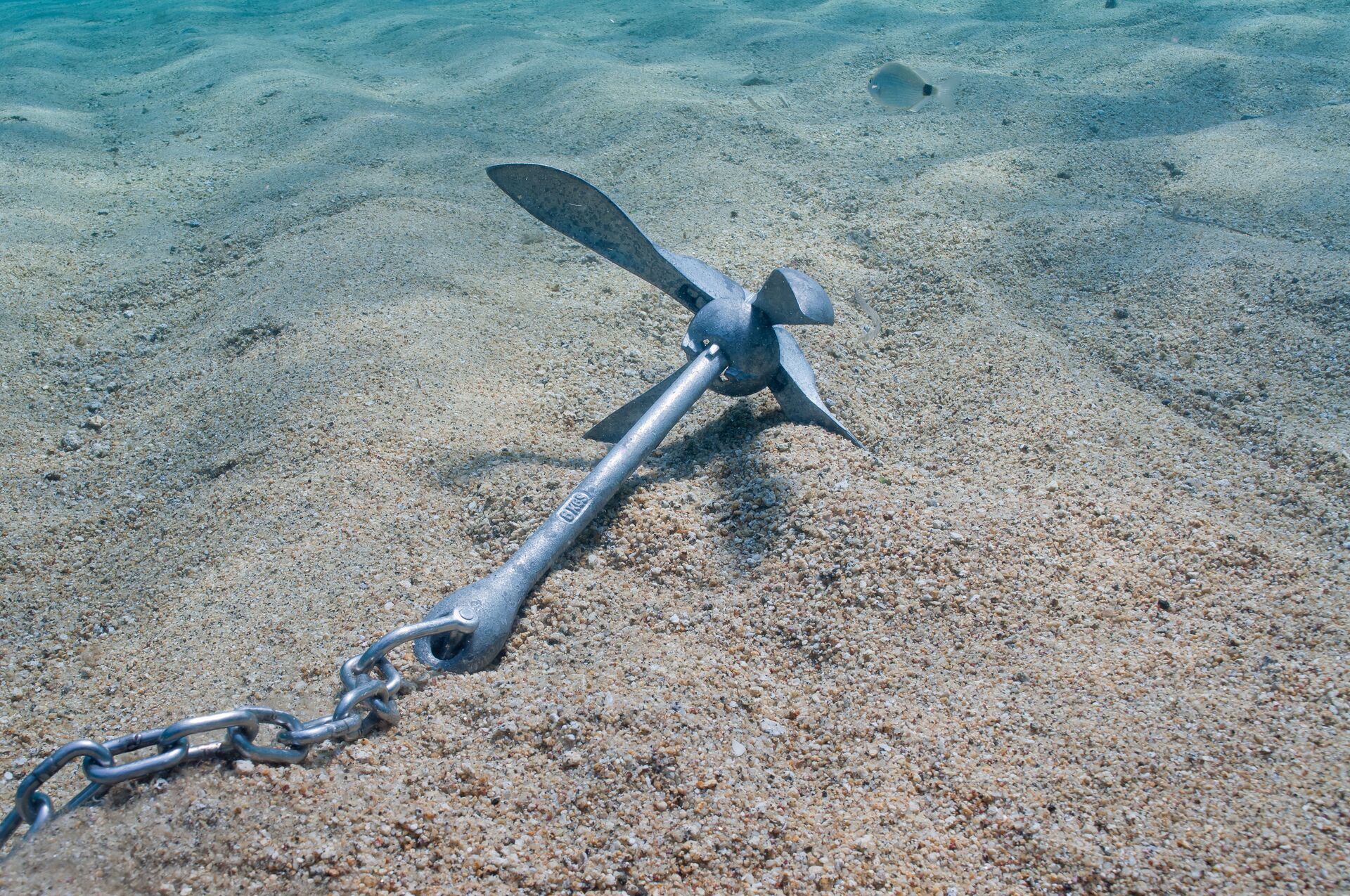
We arrived at our dive location and the crew threw down the anchor. The boat sat there drifting…rocking…swaying…in the midst of these little waves and with the sun beating down.
Oh no.
I really wanted to escape. This didn’t feel good. Everyone else was putting on their tanks and flippers, and I was struggling to pull myself together.
One by one, the students and instructor tipped into the water from the side of the boat.
I hobbled over to the edge, put my regulator in my mouth and plopped into the water, thinking to myself, okay, you got this, you’ll get off this bloody, rocking boat and you’ll cool down in the water!
It was not better in the water.
My instructor swam over to me to see why I wasn’t descending. Why I’d spit that regulator right out of my mouth. Well, it was because I had started panicking.
I couldn’t descend. I couldn’t breathe.
I’m gasping for breath and I don’t trust the regulator to push oxygen in me. The waves are slapping at my face and I am struggling to keep my head above water. I’m gulping in air desperately, flapping my arms…just flailing.
My instructor is shocked, especially as I had been so calm yesterday and had nailed the earlier dives. Without succeeding in this dive, I will have lost months of preparation and money, and would not become certified.
Watching my panicked eyes aimlessly track my surroundings, he asked, “What’s wrong?”
Brokenly, I attempted to let him know that I couldn’t breathe and couldn’t go under, but I could barely get any words out.
The instructor calmly spoke to me, held onto my arm, and guided me to the back of the boat. He kept telling me just to put the regulator in my mouth and breathe the oxygen from it. That all we need to do was go below the surface, and things will calm down. He said, “There are no waves under water.” Well, can I just say that that was easier said than done?
Finding the Anchor
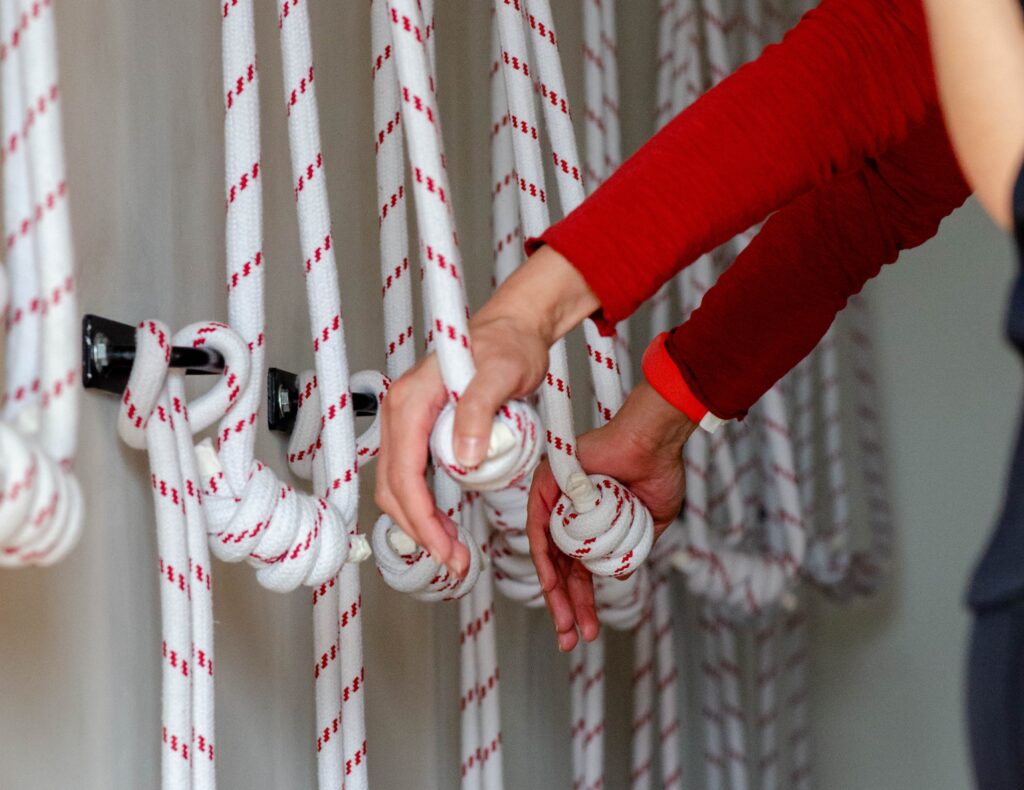
He guided one of my hands to the anchored rope attached to the back of the boat. After a moment of holding on, I finally slipped the regulator into my mouth and took a few gasps of breath. Seeing that some oxygen had started to flow into me, he said, let’s just go down together, holding on to the rope, one hand after another.
That moment of lowering my head into the water after panicking, after my body refused to trust that I could breathe underwater…that moment was the hardest moment.
Once submerged, I held on to the rope. Under water, I began to get my breathing under control. He was right, there were no waves under water.
One hand after another, I began to descend, clinging to this rope, slick with algae, but thick, strong and steady. Without overthinking, I simply looked at my hands, focused completely on their progress, and continued moving.
I calmed.
Going down as deep as necessary, I was able to complete the dive. To be honest, I don’t remember much about what I saw…I was just biding my time there under water, calming my breath as much as I could, slowing down the systems of my body, and trying to let go of the adrenaline that had been flowing furiously just minutes earlier.
I moved and swam away from the boat, but that anchor was always within my line of sight.
After the dive we returned to the boat. Checking my oxygen levels, it was apparent that the after-effects of the panic had depleted much of my tank.
There was enough left for the next dive, but I had not been efficient in my breath.
The final dive went off without a hitch. While not the most enjoyable experience of my life, I had learned some important lessons:
- It was absolutely effective to ground myself in something stable, when my whole world was rocking and I was drowning in panic.
- It was completely counter intuitive physically to start breathing through my mouth (with the regulator) and to go below the rocky surface of the water to get to the calm deep of the sea. Sometimes the one thing that seems the most counter-intuitive is actually your escape route from panic. And as hard as it may feel at the time, breathing is key.
- Being with someone kind and understanding can guide you to your anchor. The wisdom and quick thinking of my instructor to hold onto the anchored rope (called the anchor rode) not only saved me in that moment, but has been a metaphor for other challenging moments in life.
- Anchors and their rode are rarely as literal as in my story. In life we can find anchors in the form of people, faith and practices. The cords that tether us to them are ideally long enough to allow for freedom of movement, while still offering us a way back to the source when we need it.
- That rope was a literal lifeline for me that day. I didn’t descend directly, vertically downward like my peers, but instead descended along the gradual slope of the rope, by placing one hand after another. It’s okay (and sometimes preferred) to take the long way, and by focusing on what is directly in front of you, one step at a time, you can overcome overwhelm.
What are your anchors? What are your lifelines?
Have you ever had the experience of finding yourself in a dangerously adrift place in life, and somehow, one hand after another, pulled yourself out, into safety? Into stability? Have you reflected upon that and marveled at just how amazing you are for having done so? How resilient that was? Can you identify the anchor rode and/or anchor that served you in that instance or period in your life? Do they still serve you today?
Take a moment to appreciate them and yourself.